Search This Blog

Translate

Thursday, January 10, 2013

To Go Bad


Idiom: to go bad; used as a verb

First Example:

Christina: What is that awful smell?
Russell: Rotting vegetables - it's in the trash.
Christina: Why do you have rotting vegetables?
Russell: I forgot some vegetables in the back of the fridge and they went bad.  I think they were in there for like 6 months.  Some of them turned black.
Christina: Why don't you take the trash out so the smell doesn't get worse?
Russell: You know, that's a good idea.

Meaning: When something "goes bad," it means that it becomes rotten, evil, or bad in some way.  The most common use of the expression is the one above, when describing food that was good but has "gone bad" and become rotten or stale.  In the example above, Russell says that the apples "went bad" because he left them in the fridge too long. 
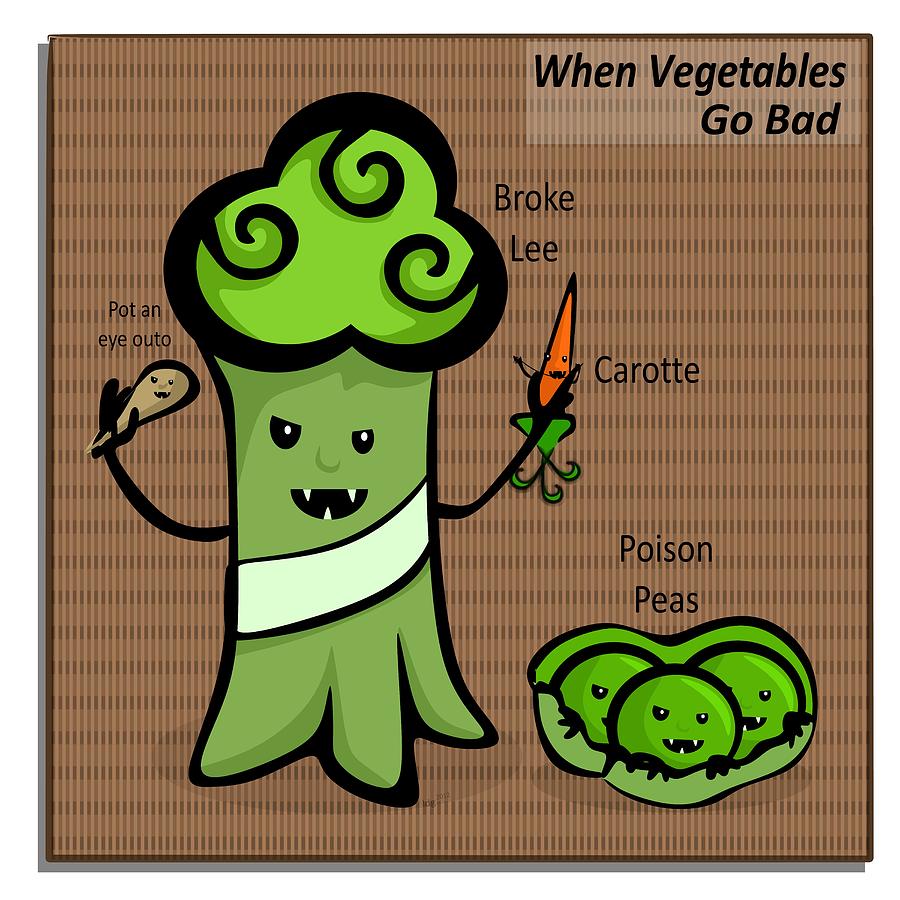
In addition, "go bad" used to be commonly used for once-good people who started doing bad things, such as criminals.  A college student who started selling drugs might have been referred to as "a good boy gone bad" in the past, although many people would now laugh at that usage for being old-fashioned.  This meaning is also the basis of the expression "break bad," which is used to describe a person who has chosen a life of crime.  This expression is a regional expression, which means that only people from a certain place commonly use it, but the expression has recently become famous thanks to the popular television show "Breaking Bad," which is about a High School Chemistry teacher who started making illegal drugs.

This idiom is from LSI's new edition of "Reading Horizons," which will be used in the Level 6 Reading classes. For more information, please visit http://www.languagesystems.com/   

Tuesday, January 8, 2013

off season

Idiom: off season; used as a noun or adjective

First Example:
John thought he could afford to go skiing when he saw cheap rates for hotel rooms - only $59 a night!  He started to make plans with his friends, but then he realized those rates were for the off season.  During the time of year that there was snow, the rooms were over $200 a night!  That's too expensive!


Meaning: "Off season" is a phrase that refers to a period when something is not usually done. This idiom is often used to specify an unpopular time to go to a certain place, such as in the example.  Many areas that are popular destinations for skiing are not popular when there is no snow, so times with no snow (such as during summer) would the "off season."  Things such as hotel rooms are usually cheaper in these types of areas during off seasons.   In the example above, "off season" is used a noun, referring to the time period.  This idiom can also be used as an adjective, and it is also commonly used to describe when a sport is not played, such as in the next example:

David:  Hey Chuck, what are you doing after work tonight?
Chuck:  I'm going to the gym.  I've got to stay in shape for my basketball league.
David:  But basketball season ended a month ago.  Can't you take some time off?
Chuck:  I did last year, and I was really out of shape when the season started.  This year, I've decided to do some off-season training to make sure I'm ready when it starts.
David:  Wow, you're really dedicated.

In this case, Chuck is doing off-season training to make sure he stays in shape even though the basketball season recently ended.  Notice that a hyphen is used when the phrase is used as an adjective that comes before a noun; this is to make sure the reader understands that "season" is not a noun but part of an adjective.
Note: While "off season" would seem to be the antonym of "in season," the two are actually used in different (and possibly confusing) ways.  While "off season" is used for activities and sports, "in season" is used for foods that are available for limited times and times that certain animals can be hunted.  Strawberries and duck hunting can be "in season", but you would not say they are "off season" when not available/legal; instead, you would say they are "out of season."  Conversely, skiing areas and basketball can be "off season," but you would not say that skiing or basketball is "in season."

This idiom is from the upcoming edition of LSI's book "Reading Horizons," which will be used in the Level 6 Reading classes. For more information, please visit http://www.languagesystems.com/   

Thursday, January 3, 2013

To Be Moved


To be moved: to be affected emotionally

Example 1:

Taka: I just saw that new movie everyone has been talking about!

Sarah: Really? You mean the one with that child actor, Josh Roberts?

Taka: Yes, he really did a wonderful job acting. The movie is about a boy who is blind, but learns how to do amazing things. I was really moved in many of the scenes in the movie. In fact, I even cried a couple of times because his acting was so powerful.

Sarah: Wow! I didn’t think it was possible for a 10 year old child to act so well in a part like that, but I heard that he has been nominated for many awards.

Taka: I know! I saw him accepting an award on TV last night and I was even moved by his speech! He thanked his parents and sister. He seems like such a nice boy.

Sarah: Ahhh. That’s so sweet, especially coming from a 10 year old.

Taka: Yes, it’s hard not to be moved when a child is so talented and speaks so well.

 Example 2:

Ken: What’s a matter, Jackie? You look so sad!

Jackie: Oh, sorry. I’ve been crying a lot.

Ken: Oh, no! Why? What made you so upset?

Jackie: Today was my last day teaching TOEFL at LSI. I’ve decided to go abroad and teach ESL in Korea.

Ken: OK. So shouldn’t you be happy and excited?

Jackie: I am excited, but I’ll miss my students a lot. Today, they gave me a card and a homemade cake at the end of class. I was really moved by their kindness. They were a great class and many of them are my friends.

Ken: I know that can be hard leaving one place and going to another.

Jackie: I was so moved that I started crying and just couldn’t stop!

Ken: It’s OK. Soon you’ll be starting your new job abroad and you’ll be fine.

Jackie: Yes, I know. And I have a lot of really good memories.

Meaning:
To be moved means to be affected emotionally by something or someone. In the first example, the movie and the child actor really moved Taka. In the second example, the going away party the TOEFL class gave Jackie really moved her.

This idiom can be found in the upcoming new edition of Reading Horizons. This book is used at LSI schools in the level 6 Reading/Vocabulary classes. For more information, please visit: www.languagesystems.com

Monday, December 31, 2012

Thumbs Up


Thumbs Up


Meaning: a sign that means “good” in the U.S.

Example 1:
Ted: I was so nervous during my presentation in class this morning! I really wanted to do well in front of all those people.

Sheila: Really? You didn’t look nervous at all. I thought you did a great job.

Tom: Well, I started out kind of shaky, but when the teacher gave me the thumbs up from the back of the class, I became more confident and relaxed.

Sheila: That’s good. You deserve a big thumbs up for such a great presentation!

Tom: Thank you! Are you ready for your presentation tomorrow?

Sheila: I don’t know. After I start, could you give me the thumbs up to make me more confident!

Ted: Sure! I know you’ll give a great presentation.


Example 2:
Kim: Wow! That movie was great! I’m giving it a big thumbs up!

Gina: Really? What was it about?

Kim: It was an action movie and the excitement never stopped. There wasn’t one slow scene in the whole movie.

Gina: Well, if you give the movie a thumbs up, then I’ll have to see it. We like the same kind of movies.

Kim: You should definitely see it. You won’t be disappointed!

Meaning:
Thumbs up shows that someone or something is good, especially when it comes to a performance or action with good results. In example 1, Ted was giving a presentation and was doing well, so his teacher gave him a “thumbs up” from the back of the class. We usually use thumbs up with the verb “give.” In example 2, Kim loved the movie she saw, so she gave it a “thumbs up” meaning it was really good.

This idiom can be found in the LSI textbook Speaking Transitions. This book is used in the level 4 Listening/Speaking classes. For more information, please visit: www.languagesystems.com

Wednesday, December 19, 2012

Up to a Point


Up to a Point
Meaning: not completely, partially, not fully


Example 1:
Terry: I don’t know what to do. I’m so upset!

Sarah: What’s wrong?

Tom: My roommate is so messy! All I ever do is clean up after her.

Sarah: Really? Have you tried to talk to her about it?

Tom: That’s the problem. She is so nice and when she first moved in, she warned me that she wasn’t very clean. I mean, I can handle a messy house up to a point, but it’s ridiculous when I find pieces of bread under the sofa cushions!

Sarah: Wow. I guess that would get annoying. Why don’t you just tell her that? Just say that you have been able to handle this situation up to a point, but now it is just too much and she needs to make some changes.

Terry: You’re right. I will talk to her and hopefully things get better. Otherwise, I’ll need to find a new roommate and that’s hard.

Sarah: Well, good luck!


Example 2:
Kelly: I’m really happy with my new job and I’m getting a lot of hours, so I’ve been able to save a lot of money.

Jenny: That’s great. Do you work on the weekends, too?

Kelly: Yes, I do. I can work weekends up to a point, but if I do that for too long, I’ll get really tired.

Jenny: You should probably tell your boss so that he doesn’t expect you to always work weekends.

Kelly: You’re right. I’ll let him know that working on the weekends is only temporary.

Meaning:
Up to a point means partially or not completely. In example 1, Terry is able to tolerate his roommate’s messy habits partially, or somewhat, but he is at the point now where he cannot handle it.  In example b, Kelly is happy to be working a lot of hours so that she can make more money. However, she can only work a lot on the weekends for a while and doesn’t want to do it permanently.

This idiom can be found in the LSI textbook Reading Horizons, 2nd edition. This book is used in the level 6 Reading/Vocabulary classes. For more information, please visit: www.languagesystems.com

Monday, December 17, 2012

To Hit the Jackpot


To Hit the Jackpot


Meaning: To have really good luck or to be very successful at something

Example 1:
Tom: I was looking for an apartment for so long that I was about to give up. But last Sunday, I hit the jackpot! I found an absolutely perfect place.

Sarah: That’s great! Where is it?

Tom: It’s only two blocks from the school, so I can walk every day. Also, there is a supermarket and theater right across the street. Plus, it has a really nice pool where I can have parties on the weekend. And it’s only $600 per month!

Sarah: You really did hit the jackpot! How did you find it?

Tom: A friend of my uncle Bob needed to rent it fast and wanted someone responsible. I guess that would be me!

Sarah: Congratulations!


Example 2:
Kelly: You and Sam make such a good couple. You really hit the jackpot when you met him!

Jenny: Yes, I know. When you consider how we met, then I really consider myself lucky.

Kelly: Really? How did you meet?

Jenny: Well, I crashed into him at a stoplight while on my way to work. There was a lot of damage to his car, and I thought he would hate me instead of asking me out on a date!

Kelly: What a nice guy! I guess he was able to ignore your bad driving skills and get to know you as a person.

Jenny: Hey! I’m not that bad! I just made a mistake. Besides, I really did hit the jackpot that day. Who knows about the future?

Meaning:
To hit the jackpot means originally meant to win a lot of money when gambling or playing a game. However, it is commonly used to show when someone is lucky at finding a good deal, like the apartment in the first example. Also, if someone finds a good friend or spouse, it can also be used to express luck (see example 2).

This idiom can be found in the LSI textbook Reading Horizons, 2nd edition. This book is used in the level 6 Reading/Vocabulary classes. For more information, please visit: www.languagesystems.com

Monday, December 3, 2012

make up your mind!

Example 1: I just can't make up my mind! Should I go to El Camino College now, or stay at LSI to study English for 6 more months?! Someone help!

Example 2: You need to make up your mind soon. El Camino's application deadline is coming up, so you need to make a decision soon!

Explanation: make up one's mind = make a decision
The decision should have more than one option. In example 1, the student is deciding between El Camino College or LSI. In Example 2, they are urging their friend to decide between El Camino College and LSI.

I need to make a decision = I need to make up my mind
She needs to make a decision = She needs to make up her mind
We need to make a decision = We need to make up our minds

This idiom  can be found in Reading Savvy, 1st Edition. This book has been used to teach Level 5 Reading/Vocabulary. To learn more, please visit www.languagesystems.com