Search This Blog

Translate

Showing posts with label enjoy learning. Show all posts

Tuesday, July 5, 2016

To Eat It


Context #1

Jim:  Hey, what happened to your elbow?  It's all bandaged up.
Tony:  Well, I was riding my bike to school yesterday and I ate it when I was going down hill.
Jim:  Wow!  You have to be careful.  


Context #2

Susie: I heard your boyfriend is teaching you how to skateboard.
Jenny:  Yeah, that's right.  
Susie:  Is it hard?
Jenny:  Well, the first few days I was trying to figure out how to keep my balance.  I ate it a lot and scrapped up my knees and hands. 

Meaning: "to eat it" is an idiom that means "to fall" while doing some kind of sport or activity (surfing, snowboarding, riding a bike, jogging, etc.)  Usually it is used when a person falls down and gets a little hurt.  

Thursday, May 26, 2016

To Shape Up

EXAMPLE  1:
Dear Zora,
This is the last time I will remind you to wash the dishes after cooking.
We are roommates and we share a space. You never clean up after yourself! I always have to ask you to keep the apartment clean... Sometimes I feel like I am your mother! Seriously, if you don't shape up, I will ask you to leave. 
Sincerely,
Tasha Orushko


EXAMPLE 2:
Dear Tasha,
I don't care what you say! I pay my rent on time and I always wash the dishes!
I am not your maid. I will clean up my mess, but don't expect me to pick up after you.  Am I clear?
You are the one who has to shape up, my friend!
Have a great day!
Zora

MEANING: To shape up means to improve performance or behavior 


Thursday, May 19, 2016

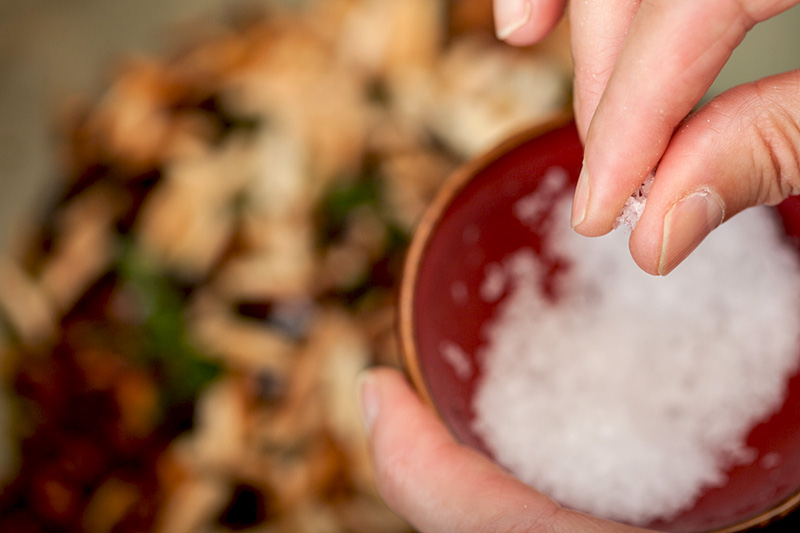
To Take Something With a Pinch/Grain Of Salt (used as a verb)


 Photo by PSC1121-GO


First Example:

Lucy: Did you go to that political rally last night?
Jason: Yeah, and it was amazing! She had such great ideas, and her campaign promises are really inspiring.
Lucy: Maybe, but make sure you take anything she says with a pinch of salt.
Jason: What do you mean?
Lucy: Well, she's a politician. They're known for promising things they can't actually deliver just to get more people to vote for them.
Jason: I know, but I think she's for real.

Meaning: 

To "take (something someone says) with a pinch of salt " is a phrase that means you should be critical of what a person says. This idiom is often used when the person who says it doesn't trust something another person said, or thinks they have an ulterior motive.  In the example, Jason is excited by a political candidate, but Lucy says he should take what she says with a pinch of salt, suggesting that the candidate may be promising things she doesn't intend to deliver on.  
In addition, the word "grain" is sometimes used instead of "pinch." The idiom means the same thing with either "pinch" or "grain."

Here is another example:  
            
Bill: Want to try that restaurant that just opened?
Kelsey: I don't know; I heard their service isn't very good.              
Bill: Where did you hear that?
Kelsey: I read a review on Yelp.
Bill: Oh. Well, I take reviews on there with a grain of salt. A lot of people only write reviews if something went wrong and they want to complain.
Kelsey: True, and it got a pretty good review in the paper. Yeah, let's try it and decide for ourselves.


In this case, Bill says to take online reviews with a grain of salt, suggesting online reviews are often skewed. 

Thursday, April 21, 2016

For the Birds


Context #1 – Roommates watching TV at home

Vanessa: This new TV show was supposed to be so good, but it's really boring and confusing. I have no idea what's going on.
Brad: Yes, this show is definitely for the birds. Why don't we change the channel?
Vanessa: I agree. Even reruns of old shows are better than this!

Context #2 – Two friends at a party

Sami:  Hey, Petra! How are you?
Petra: OK, I guess. I hardly know anyone here.
Sami: Yeah, me too. I thought Brian invited a bunch of our friends?
Petra: I don't see anyone. Plus, these snacks suck. A few carrot sticks and sparkling water? Seriously? This isn't supposed to be a health club, it's a party!
Sami: I know. And this live band is terrible. They are just making noise, not music.
Petra: You know what? This party is for the birds. Let's get out of here and go some place fun!
Sami: Great idea! Let's go.


Meaning: “For the birds” means that something is worthless or undesirable. In Context 1, the new TV show is terrible and not even worth watching, so they decide to change the channel. In Context 2, the party doesn't have good food, music, or people they know, so it is no good. Petra and Sami finally decide to leave.

Check out the following video that is literally "For the Birds!"


Thursday, March 17, 2016

Mellow (used as an adjective)


First Example:
            Steven: Long week, huh?
            Sharon: Yeah, I'm exhausted.
            Steven: Are you doing anything special this weekend?
            Sharon: Nope. I'm just gonna keep it mellow, maybe rent a movie and order pizza. If possible, I think I'm going to avoid leaving my house until Monday.
            Steven: That sounds great! I wish I could relax, but I'm taking the kids to Disneyland.
            Sharon: Well that sound fun.
            Steven: I'd rather be relaxing like you.

Meaning: While "mellow" can describe a taste (for example, a mellow dish would be pleasant and mild, not spicy or strong in any way), it can also be used to describe an atmosphere or attitude. A person or place that is mellow is relaxed and laid-back. When Sharon says she is going to keep her weekend "mellow," she means she is just planning on relaxing.

Second Example:
            Grace: What do you think of the new math instructor?
            Todd: I like her so much more.
            Steven: Me too! She's such much more mellow than Mr. Sanchez was!
            Sharon: I know! He was so high-strung!


Meaning: In this instance, Steven says that the new instructor is more mellow than Mr. Sanchez, meaning the new teacher is more relaxed than their former teacher, who was nervous and anxious according to Sharon.


http://www.languagesystems.com/

Thursday, March 3, 2016

To Be/Have a Big Mouth

Context 1:


Bill: Sara, do you think anyone knows about what happened on Sunday? It was so embarrassing. 
Sara: Don't tell Johnny anything if you want to keep this secret. He HAS a big mouth! Everyone will know what happened in a few hours!


Context 2: 

I learned that it's not good to BE a big mouth. I learned my lesson after I got my friend in trouble. I used to gossip and tell everyone everything, whether it was true or not. One day, I heard some negative gossip about my friend. I didn't think it was true, but I told my classmates about it because I loved to gossip. Later, our classmates wouldn't talk to her because they thought the gossip was true I felt terrible because it was my fault. I apologized to my friend and I promised myself that I would never gossip again!


Explanation:
You can BE a big mouth OR you could HAVE a big mouth. The meaning doesn't change. 
This expression describes someone who talks too much, often revealing secrets.  


Tuesday, May 19, 2015

To let someone down

Idiom: To let someone down; used as a verb

First Example:
Jeffrey was sure he could make the goal, so he asked Thomas to kick him the ball. But he missed the goal and his team lost. He really let them down. 

Second Example:
Jenna promised her mom that they would have breakfast together on Mother's Day, but she forgot to set her alarm.  When she woke up at 11am, she called her mom, but she had already had gone out for brunch with a friend. Jenna said she was sorry that she let her mom down and promised to make up for it next week.


Meaning: To "let someone down" means to fail or disappoint that person or group. Usually, this expression is used when the person/group being let down was relying on the person to be successful, and the failure was that person's fault. In the first example/illustration above, Jeffrey missed  after he said he was sure that he could make the goal; if he hadn't said he could make it, he wouldn't have let them down. In the second example, Jenna let her mom down after sleeping through the Mother's Day breakfast she promised.


Wednesday, April 15, 2015

To be wild about (something)

Idiom: To be wild about
  

Meaning: To have a strong, almost uncontrollable, liking to someone or something. 

Context #1 – Someone has fallen in love.

Matt: Leslie, I have something to confess. 
Leslie: Okay, what is it?
Matt: Well, we’ve been spending a lot of time together these days, and well, what I’m trying to say is I’m kind of wild about you.
Leslie: Oh Matt, I feel exactly the same way.  I can’t stop thinking about you all the time.
Matt:  Really?  I’m so happy to hear that because I feel that way too.  I really like you and just want to spend all my time with you.


Context #2 – Talking about baseball between friends.

Don: I love baseball season.  There’s nothing better than a good ballgame.
Summer: I know.  Every year you say the same thing.  Why are you so wild about baseball?
Don: Everyone I know likes baseball.  I’ve been watching and playing baseball since I can remember.  The games, the players, the food, the atmosphere can make your entire day fantastic.  I’m more than wild about it, baseball is life.
Summer: I guess I can’t argue with that.  Besides, baseball has become popular in many countries now. 

Meaning: The idiom “wild about” means to like something very much.  Being wild about something means you can like something to an extreme, for a brief or extended time. 


Tuesday, April 14, 2015

Like wildfire

Idiom: Like wildfire


Meaning: Spreading, growing or gaining popularity in an accelerated way; Quickly gaining attention. 

Context #1 – A new song was released by a very popular music artist.

Joc: Hey Clay, did you hear the new McPac-Man song? 
Clayton: No, why?
Joc: Dude, seriously?  It’s been spreading like wildfire.  It’s become so popular across the world, so quickly, that the president wants to meet him.
Clayton: No way!  That popular?
Larry:  Yeah!  They say it will be the track of the century.

Context #2 – The most popular kids in school started dating.

Jay: Manny started dating Jinkee.
Alice: I heard! OMG
Jay: Wow, I guess everybody knows.
Alice: I guess so.  Seems the news has been spreading like wildfire.
Jay:  Yeah, even our other campuses know about this romance.
Alice: Wow, it really is like wildfire. 
Jay: With social media, you can’t keep anything a secret for long.

Meaning: The idiom “like wildfire” means that information about something positive/negative has spread so quickly that it’s almost impossible to stop.  Spreading like wildfire means gaining popularity at a pace most people didn’t imagine possible.  The news become almost impossible to control.


Wednesday, April 8, 2015

Rocket science

Idiom: Rocket science


Examples:

Context #1 – Two friends are discussing the effects of illegal drugs
Lars: You know, I don’t agree with what the professor said in class today.
Katrina: Hmmmm? About what?
Lars: He said that drugs are the biggest problem in our society today.
Katrina: Well, they are really bad, especially for younger people.
Lars: What about crime? I think that is the biggest problem today.
Katrina: Drugs equal crime. It’s not rocket science! The connection is really clear.
Lars: Oh, I never thought of it that way.

Context #2 – Julia is planning a party for her 6-year-old sister
Julia: Oh, I’m so nervous!
Tito: Why? What’s up?
Julia: I have to plan a birthday party for my little sister. She is turning 6 years old. What should I do?
Tito: Come on! It’s not rocket science! It’s a party for a 6 year old girl. How difficult can that be?
Julia: Well, I want her to have fun!
Tito: Buy a cake, balloons, and presents. Then invite a bunch of her friends over and play some games.
Julia: Well, maybe they want to do something more than that. Maybe I should bring someone in to do their make up and nails. Wouldn’t that be fun?
Tito: They are 6 year-old girls. I think games, presents, and cake should be enough.

Meaning: Something that is not very complicated or difficult to understand
“People use this idiom when they want to describe something that is simple and easy, not complicated. It is usually used in the negative. Instead of saying “it’s not rocket science,” you can also say “it doesn’t take a rocket scientist!”