Search This Blog

Translate

Thursday, December 1, 2016

To Cut a Rug (used as a verb)

Idiom: to cut a rug; used as a verb


First Example:

Brie: I saw you dancing with Deb. You guys really cut a rug.
Aj: Yeah, we were having a blast.
Brie: I didn't realize you were such a great dancer.
Aj: Neither did I! I think Deb is the great dancer, and she just made me look good!


Meaning: The expression "cut a rug" means to dance really well, usually in a very energetic way.  The expression was most popular in the 1920s, although it is still sometimes used to this day.


Tuesday, November 29, 2016

Bootleg

Bootleg; used as an adjective, noun or verb

Context #1:

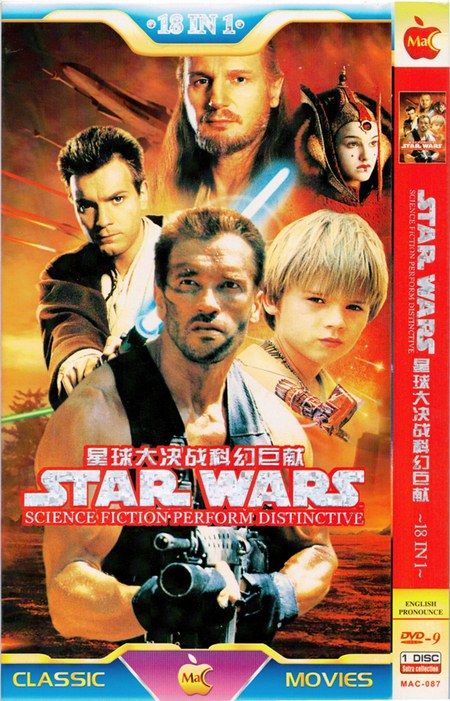
Maria: Do you want to watch the new Star Wars movie?
Henry: Yeah, but it's not out yet. Christmas seems so far away
Maria: I have a bootleg copy.
Henry: How did you get that?
Maria: I downloaded it. Come over tonight and we'll watch.
Henry: I don't know; I'd feel guilty.
Maria: It's up to you, but I'm going to watch it.


Meaning: The word "bootleg" means that something was obtained and/or sold illegally. In the above example, Maria downloaded a movie that hasn't opened in theaters yet. Since she didn't pay for the movie, it's a "bootleg"."Bootleg" can be used as an adjective, as in the conversation above, and as a noun, as in the previous sentence. It can also be used as a verb, as in the following example, which explains the word's past:


The word "bootleg" was first used in the late 19th century, and it's believed it originated with cowboys who hid small guns in their boots. Whatever the origin, the word "bootleg" was associated with secrecy. In the 1920s and early 30s, Prohibition was passed, making all alcohol illegal to sell or produce in the United States. Of course, some people started illegally selling, or bootlegging, alcohol that was either purchased in another country (often Canada) or made illegally. Since then, the term has been used for any illegal production and distribution, especially those of inferior quality when compared to the original item. A person can bootleg music (especially concerts recorded without permission), movies (often cheap DVDs, sometimes handheld recordings from inside movie theaters), software, toys, games and of course, homemade alcohol.

http://languagesystems.edu/

Wednesday, November 23, 2016

To gobble (something) up/down


Context #1:

Kirk: We gotta leave soon if we're going to make the play.
Jake: I just made dinner.
Kirk: Then let's gobble it up; we have to leave in 10 minutes.
Jake: Ugh. I shouldn't have bothered making anything nice.
Kirk: Sorry, but I told you we had these tickets for tonight.
Jake: I know.

Meaning: The word "gobble" is an English onomatopoeia that is used to describe the sound a turkey makes (Onomatopoeias are words like "bark" and "bang" that imitate sounds). But the expression "gobble up" means to eat very quickly, usually because the person is in a hurry or very hungry.  In the above example, Kirk says they need to "gobble up" their dinner because they need to leave for a play. Paradoxically, "Gobble" can be used with the prepositions "up" or "down" and have the exact same meaning, as in this next example:


Context #2:

Jean: This birthday party is a disaster!
Will: Why? The kids seem to be having fun.
Jean: I just put out the pizza, and they gobbled it all down in 5 minutes. They want more, but that's everything I ordered.
Will: Can't you order more?
Jean: It'll take at least half an hour to get here.
Will: Well, let's serve the cake then. Maybe they'll fill up on that.

http://languagesystems.edu/

Tuesday, November 22, 2016

Black Friday; used as a noun


Context:

Alex: What are you doing over the Thanksgiving break?
Armando: Well, I'm spending Thanksgiving evening with my parents, and then I'm spending the night in a Best Buy parking lot.
Alex: Why would you do that?
Armando: It's Black Friday. I need a new computer, and they are selling a laptop I've had my eye on for really cheap. But they will have like 5 at that price, so I'm going to camp out in front of the stoor.
Alex: That's sounds dreadful. I will be wishing you luck from the comfort of my apartment.


Meaning: The expression "Black Friday" is a nickname for the day after Thanksgiving in the United States. Thanksgiving is a harvest celebration, and in the US, it's always celebrated on the fourth Thursday in November. Because it's on a Thursday, most schools and companies stay closed on the day after. Since everyone is off work and it's roughly a month before Christmas, the day has become one of the most popular shopping days in the US. In order to attract customers, stores usually offer their best sales on that day, although many of these sales are limited, as explained by Armando in the example above. Because of these limited sales, some people have made the day almost a competitive shopping holiday, and every year there are reports of shoppers fighting over an item and people falling and being trampled when the store's doors open.

http://languagesystems.edu/

Thursday, November 17, 2016

The late __ (person's name or social position)


Context #1:

​I was married to my husband for 37 years. I miss him so much. He passed away 5 years ago. When it rains, I miss him even more...​My late husband used to enjoy his garden, especially after it rained. He was a good man.​


Context #2:

November has been a very sad month in America. Many bad things happened, but for me, the saddest thing was to find out that one of my favorite singer/song writers passed away. He died on November 10th. The late Leonard Cohen was great and ​wrote many of my favorite songs.

Meaning: dead. We use "the late" before a name or title to indicate that person is not alive. If the person is loved and respected, we often use "the late great" before the name or title.

http://languagesystems.edu/


Tuesday, November 15, 2016

To slip (my, his, her) mind

Context #1:

Terrence dials a number on his cell phone. His friend, Will, answers.

Will: Hello?
Terrence: Will? Where are you?
Will: At home. What are you doing, Terrence?
Terrence: Waiting for you! We agreed to meet in Downtown, remember?
Will: I'm so sorry, Will. It totally slipped my mind. I'm on my way!

 
Context #2:

Linda and John arrive home to find dinner in the oven and ​it's ​burnt.

Linda: John, weren't you supposed to turn the oven off before we left?

John: I guess it slipped my mind.

Meaning: to forget. We use this idiom when we have a thought or intention and that thought or intention "slips away" before it becomes an action. 
http://languagesystems.edu/

Thursday, November 10, 2016

Be bent on doing something

Context #1:

Jean: Phillip! I'm so tired! Can't we finish tomorrow? The project isn't due until 5 pm. We have plenty of time in the morning. Let's go to sleep!
Phillip: No way, Jean. I told myself we'd finish this by tonight and we're not going to bed until we do. Sorry!
Jean: You're being really selfish, you know. You're so bent on finishing this project but you're not considering any one else's feelings. I'm tempted to just let you finish it on your own.
Context #2:

Mother: Son, why are your grades so low in your science class this semester?
Son: I don't know mom. I work really hard but the teacher is bent on making my life miserable. She hates me.
Mother: Why do you think that? I'm sure it's not true.
Son: It's true. She doesn't treat me the same as others.
Mother: I'll have to go and talk to her then.
Son: NO! Don't do that. It's really OK!

Explanation: 

To be bent on doing something means that you are obsessed with doing something and you MUST do it.

In example 1, Phillip MUST finish his project, even if it means that Jean and he will lose sleep. 

In example 2, the son claims that his teacher is obsessed with making his life difficult. 

Be sure to change the be verb to match your tense and always use an ing-verb following on

She is bent on preparing all of the appetizers by herself. She won't consider a caterer. 
Mr. Lee has been bent on learning English in less than two years. He studies every single day. 
When I was a kid, I was bent on reading all of the Harry Potter books.

http://languagesystems.edu/