Search This Blog

Translate

Showing posts with label #languagesystems #ESL. Show all posts

Tuesday, May 23, 2017

A trip


Context #1

Tom: Remember our high school P.E. teacher Mrs. Stevens?
Chris: Yeah, of course.
Tom: Well I ran into her at the store yesterday. It's been like 20 years.
Chris: Wow! That must have been a trip!


Context #2

Sara: Did you see that new Matrix movie?
Jane: Yeah, but it was a little strange.
Sara: I know. That movie is a trip.


Meaning: "a trip" is a noun that is used as a kind of slang word to mean something that is strange, unbelievable, or really fascinating. The adjective is "trippy." It is used more by guys than girls. 


Visit our website: languagesystems.edu


Tuesday, May 16, 2017

Be second to none


Context #1

Saul:
 Today was such a good soccer game. I didn’t think I would score so many goals.

Jay: 
Duh, everyone knows you’re second to none. You’re the best player in the league. 

Saul:
 I didn’t really think about it that way. I’m glad people can see how hard I train.

Jay: Bro, you’re the best. Like I said, you’re second to none


Context #2

Dwayne: This restaurant is so delicious. It’s not even that expensive. 

Alexis: Yes! This place is second to none, even though it’s a small local joint.

Dwayne: I guess people never think small community restaurants like these can be world class.

Alexis: Well, most restaurants start somewhere right? 

Dwayne: Yeah. And your knowledge of finding good restaurants like these is definitely second to none.

Meaning: Second to none means literally: there is no one to whom this person would be second. Example: It is the best. It can be applied to objects, too.

Visit our website: languagesystems.edu


Tuesday, March 21, 2017

To rip off

Idiom: to rip off (verb), a rip-off (noun) – to steal something from another person; to cheat or trick someone into spending more money on a product than what it is worth.


Context #1 – Friends are taking a tour of Los Angeles

Dan: Let’s go see the Hollywood sign next, but don’t leave your bag in the car.
Juan: Really? Why not?
Dan: Because there are thieves at popular sites who often rip off tourists who are not careful with their bags and belongings.
Juan: Oh, I see. That happens sometimes in my country, especially in areas where there are a lot of tourists.
Dan: Yes, so be careful.  If someone rips us off, then we will really be in trouble!


Context #2 – Two friends are talking about buying a car

Sami: I saw an advertisement for a new car. It’s so cheap, so I really need to get to that dealership to buy it now!
Petra: Sami, do you really believe that? It’s too good to be true. Those car dealerships rip everyone off.
Sami: Really? But they can’t lie to people. That’s terrible.
Petra: They put up those advertisements to get people to go to the dealership.  Then, they say unfortunately that “good deal” is no longer available. They are very tricky. Then they will pressure you into paying a lot more for a car than what it is really worth.
Sami: What a rip-off!! That’s outrageous.
Petra: Yes, it is. You are better off knowing the full market value and shopping around at many different places. Then, hopefully, you won’t get ripped off like so many customers.
Sami: That sounds like a plan!


Meaning: To rip off is a verb and a “rip-off” is a noun. This idiom means to steal something or to purposely deceive or trick someone into paying more for a product than what is necessary.  In context 1, two friends are touring Los Angeles and are afraid that if they leave their bags in the car, a thief will “rip them off” or steal their bags. In context 2, Sami sees a really good advertisement for a car, but Petra warns him that the car dealership may be trying to “rip him off” by getting him to go there through false advertising. 

Visit our website: languagesystems.edu

Wednesday, November 23, 2016

To gobble (something) up/down


Context #1:

Kirk: We gotta leave soon if we're going to make the play.
Jake: I just made dinner.
Kirk: Then let's gobble it up; we have to leave in 10 minutes.
Jake: Ugh. I shouldn't have bothered making anything nice.
Kirk: Sorry, but I told you we had these tickets for tonight.
Jake: I know.

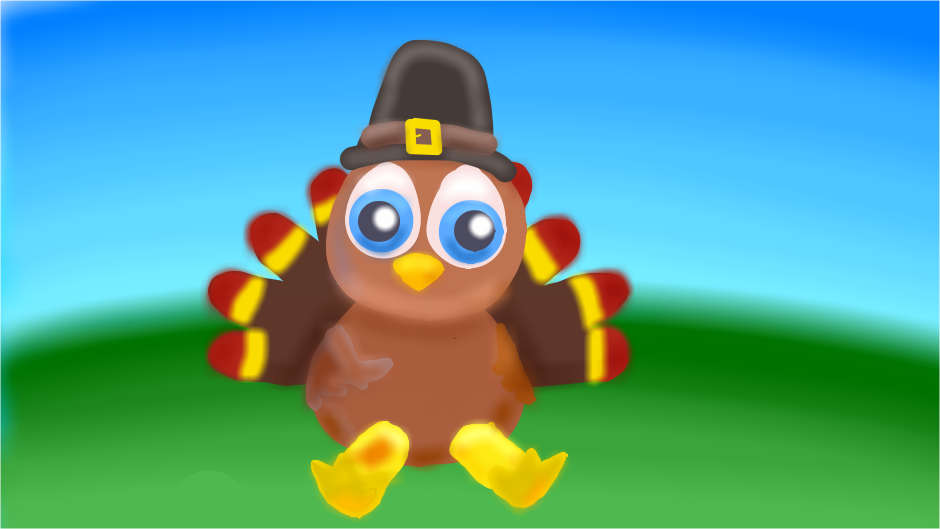
Meaning: The word "gobble" is an English onomatopoeia that is used to describe the sound a turkey makes (Onomatopoeias are words like "bark" and "bang" that imitate sounds). But the expression "gobble up" means to eat very quickly, usually because the person is in a hurry or very hungry.  In the above example, Kirk says they need to "gobble up" their dinner because they need to leave for a play. Paradoxically, "Gobble" can be used with the prepositions "up" or "down" and have the exact same meaning, as in this next example:


Context #2:

Jean: This birthday party is a disaster!
Will: Why? The kids seem to be having fun.
Jean: I just put out the pizza, and they gobbled it all down in 5 minutes. They want more, but that's everything I ordered.
Will: Can't you order more?
Jean: It'll take at least half an hour to get here.
Will: Well, let's serve the cake then. Maybe they'll fill up on that.

http://languagesystems.edu/

Tuesday, September 20, 2016

To get knocked up

Idiom: to get knocked up – to get (someone) pregnant


Context #1 – At a party with friends

James: I can’t figure out what do bring for my brother’s bachelor party next week.
Candy: Your brother is getting married? I didn’t know.
James: Yeah, he knocked up his girlfriend and they decided to get married.
Candy: Didn’t they date for seven years now. So it’s not really a big deal. They’ve been living together for such a long time anyway.
James: Yeah, we’re all pretty happy about it anyway.


Context #2 – Two friends having lunch

David:  How are you feeling these days?
Julie: Well, after I got knocked up I’m feeling pretty strange.
David: Why is that? I’m pretty sure your husband is happy though.
Julie: Oh, we really wanted a child, but my body is having some changes and I’m feeling strange.

Meaning: “(get) knocked up” means to get pregnant. People typically use this as slang and with close friends, family or acquaintances.You would never usually use this term in formal situation, for example with your boss. 

                                       http://languagesystems.edu/

Tuesday, September 6, 2016

Off the Beaten Path

Idiom: Off the Beaten Track/Path – in or into an isolated place; in a place where very few people go; a place not known by the general public


Context #1 – Roommates at home

Vanessa: Hey, Brad! I’ve been looking all over for you. Where have you been?
Brad: Oh, hi Vanessa. Sorry, I was really stressed out at work today. I needed to just get away from the crowds for a while, so I stopped by a little pub that is off the beaten path. It was nice just sitting down alone and relaxing for a while with no one to bother me.
Vanessa: You found a pub that is off the beaten path in LA?
Brad: Yes, unbelievable! There are a few regulars that go there, but it’s never crowded and people just leave you alone. It’s great when you need to unwind.


Context #2 – Two friends talking before going on vacation

Sami:  I’m so excited. I can’t wait until my vacation!
Petra: Really? Where are you going?
Sami: Well, I’ve been really stressed out with school lately, so I wanted to go somewhere that is off the beaten track. Someplace where I can be alone.
Petra: Sounds nice!
Sami: Yes. I am driving up to Oregon and I’m going to stay in a little Bed and Breakfast my roommate told me about a few weeks ago.
Petra: Well, if you want to go somewhere quiet, it is always good to find a place that is off the beaten track. Then, you don’t have to deal with all the crowded places that tourists like to visit.

Meaning: “Off the beaten track/path” means a place that is isolated or is not known by a lot of people. In context 1, Brad needs to go somewhere quiet where no one will bother him, so he finds a pub that is “off the beaten path.” In context 2, Sami wants to spend her vacation in a place that is off the beaten track so that she doesn’t encounter crowds of people and can just relax.

Thursday, August 4, 2016

To shoot some hoops


Context  #1: 

I just want to relax this weekend. I don't want to study. I don't want to clean or do laundry. I just want to relax. Maybe I'll watch something on Netflix or take a long nap. I might call up some friends and shoot some hoops if the weather is nice. 


Context #2:

We just returned from the LA Lakers NBA game in Downtown Los Angeles. It was so exciting! Basketball is my favorite sport and I can't wait to join a team so I can shoot some hoops with my friends!


Explanation:

To shoot some hoops means to play basketball. The sport of basketball is played with a ball and the object of the game is to get the ball through a hoop by throwing the ball. The verb shoot  is used the same as throw. 

http://languagesystems.edu/
https://ssl.gstatic.com/ui/v1/icons/mail/images/cleardot.gif


Thursday, July 21, 2016

To pound the pavement; used as a verb


Context #1

Leo: How's the job hunting going?
Janice: Not so great. I've been pounding the pavement all week, I've emailed out over 40 resumes, and I still haven't gotten an interview!
Leo: Sorry to hear that. But you'll find something.
Janice: I know. That's why I'm on my way to pound the pavement some more.
Leo: That's the spirit! Keep it up!

Meaning: The expression "to pound the pavement" means to walk through the streets looking for something, usually a job. But while the idiom means to walk through the streets, it doesn't always mean that someone is literally walking around; in the example above, Janice says she has sent over 40 resumes over email, suggesting she isn't literally walking around.  Less commonly, the expression can be used for non-job related activities, although in these cases, it usually means they literally walked around, as in the next example:


Context #2

The candidate's volunteers pounded the pavement, trying to reach out to their community. Due to their efforts, 1000 people joined the candidate's rally the following Saturday.

Meaning: In this example, the volunteers probably did literally walk through the streets, discussing their preferred political candidate with others.


Tuesday, July 19, 2016

By the skin of (one's) teeth; used as an adverb


Context #1

Laurie: Hey Alfonso! Wait, why are you all sweaty?
Alfonso: I almost missed the bus.
Laurie: What? You're always on time!
Alfonso: Normally, but I forgot to change my clocks after the time change and only realized when I looked at my phone, which updated automatically. I ran to the bus stop, and it was already there, and I barely caught it by the skin of my teeth.
Laurie: Good thing! This bus only runs once an hour!

Meaning: The expression "by the skin of (one's) teeth" means "just barely". This idiom is used when something was extremely close, as in the above example, where Alfonso nearly missed the bus.  In addition to just barely doing something on time, "by the skin of (one's) teeth" can also be used to show how close a competition was, as in the next example:


Context #2

Beatriz: Did you watch the basketball game last night?
Drew: Yeah. I'm so glad our team won, but that finale was intense!
Beatriz: I know! It really came down to the final seconds, but they pulled it off by the skin of their teeth.
Drew: That last shot was amazing!

Meaning: In this example, the basketball team that Beatriz and Drew were rooting for won a game, but in an extremely close match.
                                          

Thursday, July 14, 2016

To shoot from the hip


Context #1

Dana: Karen, I need to buy a new shirt for my company dinner tomorrow night. I think I'm going to buy one of these two. What do you think? Which one?

Karen: Well, the red one with the yellow sleeves is interesting - and bright. It really catches the eye! But the white and blue shirt will probably look better with your skirt. I'm just not sure I like the pink buttons. Hmmm, I don't know. Let's ask Roger.

Dana: Roger, what do you think of these two shirts? Which one would you buy if you were me?

Roger: Neither. They are both ugly.

Karen: Wow. He really shoots from the hip.


Context #2

Dear Professor Andersen,

I wanted to write you to ask if our group could submit our project again. Joseph and I did a lot of research and planning. Fred, on the other hand, did very little work. Fred knew this, so he promised Joseph and I he would read and organize all of our work and put it all together. I guess he decided to shoot from the hip because none of our research was included - and he didn't do any. Joseph and I are very worried about our grade.

Thank you for your consideration,

Jane

Meaning: To say or do something without thinking carefully about it. This can be used in a positive or negative way. When this idiom is used, it can mean a person is direct and honest (positive) or careless and thoughtless (negative).


Thursday, June 30, 2016

Don't judge a book by its cover

Idiom: Don't judge a book by its cover: to not judge the quality or character of someone or something just by looking at them
Context #1 – Students talking before the 1st day of class
Vanessa: Hey, Brad. Did you see the new English teacher? He looks so mean! I'm afraid to go to his class.
Brad: But you haven't even met him yet! Don't judge a book by its cover! Give him a chance before you form an opinion about him.
Vanessa: Hmmm. I guess you are right.
Brad: Besides, I've heard he is really funny! All the students who have taken his class say he is the best teacher they have ever had in English.
Vanessa: Wow, really? OK. I'll try his class and save my opinion for later.

Context #2 – Two friends at a party
Sami:  Hi Petra! Do you want to join us for lunch? We are going to “George's Cafe.”
Petra: Ewww, that place looks awful! It's so tiny and everything is so plain. Why don't we go somewhere else for lunch.
Sami: Don't judge a book by its cover, Petra. “George's Cafe” has the best sandwiches in town. All at a very affordable price.
Petra: Really? Wow, I guess I shouldn't judge it before I even try it.


Meaning: “Dont judge a book by its cover” is said when you cannot know what something or someone is like by looking only at that person or thing's appearance. In the first context, Vanessa has a negative opinion of the teacher based only on his appearance and that he looks “mean.” However, Brad has heard that the teacher is really good, so he encourages Vanessa to try the class and not base her opinion on just the looks of the teacher. In the second context, the place they are going for lunch is small and plain, so Petra has a bad opinion of it. However, it's actually a good place with the best sandwiches in town, so Sami encourages Petra to try it and then form an opinion based on the quality of the food.

Tuesday, June 28, 2016

To Troll

Idiom: To troll someone or something. Used as a verb (action) or noun (person). To make a  provocative online comment or posting with the goal of upsetting someone or eliciting an angry response from them. A person who posts to an internet discussion group, chat room, or blog with the sole purpose of disrupting it.


Context #1 – Two friends talking about a blog
Sal: Hey Patty, what's wrong? You look upset?
Patty: I'm so mad!! I write this blog about politics and that guy from our class, Reggie, keeps writing all these comments about Trump and how great he is.
Sal: Really?
Patty: Yes. All his comments support everything Trump says. It's crazy! No matter what I say, he just supports Trump more and argues more with me.
Sal: Well, I know Reggie and he is actually a Democrat and super liberal. I doubt he is serious about anything he is saying about Trump.
Patty: What? Do you mean he is just trolling me!
Sal: Yep. You have to admit that it's pretty funny to troll people about controversial politicians. He probably just wants to provoke you.
Patty: I never thought of that! Are you sure he doesn't like Trump? He seems so sincere when he writes comments on my blog.
Sal: Yes, I'm sure. That's what makes him such a good troll!

Context #2 – Two friends talking about Facebook
Tim: Hey, Michelle, what are you laughing about?
Michelle: Oh, hi Tim. I'm writing some comments about Hillary's recent speech on Facebook.
Tim: And why is that funny?
Michelle: Well, I'm turning her words from the speech around to make her look bad. My goodness, I had no idea her supporters would freak out so much!
Tim: You are so mean! You don't even care about the election or the candidates.
Michelle: Hahahaha! I know! But it's fun to see everyone get so upset over a few negative comments! I don't usually troll people like that, but I'm enjoying myself too much to stop.
Tim: Well, be careful. You don't want anyone to “unfriend” you because of a little trolling.
Michelle: You're right. I'll stop trolling....tomorrow!


Meaning: To troll means to purposely and cleverly provoke an angry or emotional response via the internet through comments and dialogue. However, trolling does not only mean making rude comments or statements. The most important part of trolling is to act like one truly believes what one is saying, even if it is completely outrageous. So the person who is being trolled should not know that he or she is being trolled by someone.