Search This Blog

Translate

Showing posts with label Idioms. Show all posts

Thursday, December 8, 2016

To look on the bright side


Context #1:

Amy: We need to save money.
Brian: Why do we need to save money?
Amy: Because we need to buy a house.
Brian: But a house is so expensive.
Amy: That's why we need to save money.
Brian: How much do we need to save?
Amy: We need to save enough for a down payment.
Brian: How much is that?
Amy: That's about $30,000.
Brian: Thirty thousand dollars! That will take forever.
Amy: Not if we save every penny. Besides that, look on the bright side! We're going to buy a very nice house!
Brian: Okay, okay. Here's seven pennies.


Context #2

Maura: I don’t know what to do.
Robin: What’s the matter?
Maura: Well, I’ve been looking for a job for months everyday. I send my resume, but I just can’t get a job. I think I’m going to be unemployed all summer.
Robin: Hey, hey, hey, look on the bright side. At least while you’re not in the office, you can sit outside and enjoy that beautiful weather.
Maura: You’re right. The weather has been nice lately.

Meaning:This is an expression that means "Think positively." People use this expression when they're talking to someone who's having a problem. After saying "Look on the bright side", the speaker then says something good that the person who's having the problem can be happy about. 

Thursday, December 1, 2016

To Cut a Rug (used as a verb)

Idiom: to cut a rug; used as a verb


First Example:

Brie: I saw you dancing with Deb. You guys really cut a rug.
Aj: Yeah, we were having a blast.
Brie: I didn't realize you were such a great dancer.
Aj: Neither did I! I think Deb is the great dancer, and she just made me look good!


Meaning: The expression "cut a rug" means to dance really well, usually in a very energetic way.  The expression was most popular in the 1920s, although it is still sometimes used to this day.


Thursday, May 19, 2016

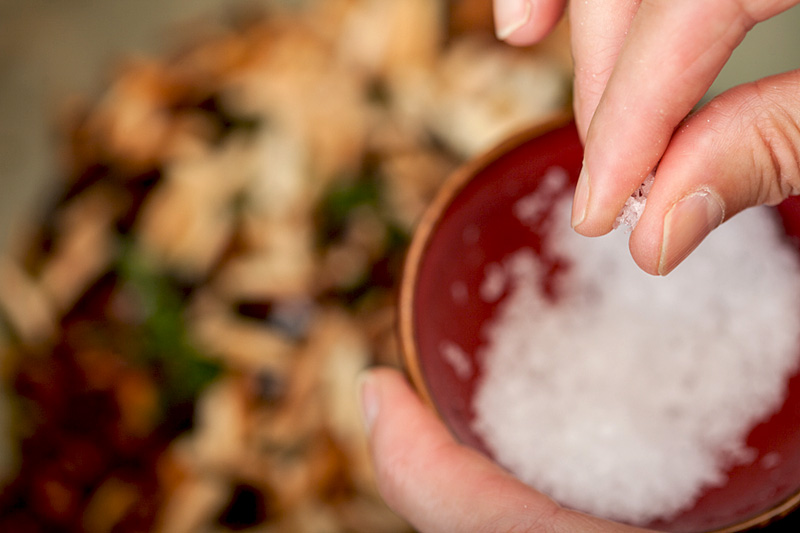
To Take Something With a Pinch/Grain Of Salt (used as a verb)


 Photo by PSC1121-GO


First Example:

Lucy: Did you go to that political rally last night?
Jason: Yeah, and it was amazing! She had such great ideas, and her campaign promises are really inspiring.
Lucy: Maybe, but make sure you take anything she says with a pinch of salt.
Jason: What do you mean?
Lucy: Well, she's a politician. They're known for promising things they can't actually deliver just to get more people to vote for them.
Jason: I know, but I think she's for real.

Meaning: 

To "take (something someone says) with a pinch of salt " is a phrase that means you should be critical of what a person says. This idiom is often used when the person who says it doesn't trust something another person said, or thinks they have an ulterior motive.  In the example, Jason is excited by a political candidate, but Lucy says he should take what she says with a pinch of salt, suggesting that the candidate may be promising things she doesn't intend to deliver on.  
In addition, the word "grain" is sometimes used instead of "pinch." The idiom means the same thing with either "pinch" or "grain."

Here is another example:  
            
Bill: Want to try that restaurant that just opened?
Kelsey: I don't know; I heard their service isn't very good.              
Bill: Where did you hear that?
Kelsey: I read a review on Yelp.
Bill: Oh. Well, I take reviews on there with a grain of salt. A lot of people only write reviews if something went wrong and they want to complain.
Kelsey: True, and it got a pretty good review in the paper. Yeah, let's try it and decide for ourselves.


In this case, Bill says to take online reviews with a grain of salt, suggesting online reviews are often skewed. 

Tuesday, February 16, 2016

Big Guns


First Example:

Nick: Who’s going to play on your basketball team for the tournament?
Ben: We have Michael taking the lead.
Nick: Oh! You’re bringing out the big guns.  You really want to win.
Ben: What’s the point of playing if you don’t have a strong leader that plays well?
Nick: That’s true.  We don’t have big guns on our team, just good team players.
Ben: Hey, that’s not bad.  You can’t depend on one good player only.  The big guns should only complement the team.


Second Example:

Julia: Hey, are you hosting the party this Saturday?
Tom: Yes.  I’m going to bring out the big guns and have a live band.
Julia: Oh cool.  You mean no DJ?  Just live music?  Who’s playing?
Tom: My friend’s brother is the lead singer of Green Day.
Julia:  What? That’s definitely the big guns.  No one will forget your party.


Meaning: The expression "big guns" refers to an important person in an organization or something/someone that has strong influence or value.  For example, Nick said to Ben that because Michael is playing, he’s bringing in the big guns.  He recognizes that Michael will make a big difference in favor of Ben’s team.  He can add value or strong competition for the team.
By Carlos T. #NELA

Thursday, February 4, 2016

Cram for a test

Meaning:  the act of attempting to learn a large amount of information in a short period of time, especially for a test.


Example 1
.
Jack and Jessica are classmates, and are in the classroom right now.

Jessica: You look stressed.
Jack: I am super stressed!!
Jessica: Why?
Jack: Jonas just told me that we have a test today in class!
Jessica: How come you didn’t know that?
Jack: I was sick this week so I have been absent for three days.
Jessica: Oh no!! What are you going to do?
Jack: I’ve been cramming for the test for the past hour!


Example 2

Megan is talking to her sister, Ella, at home in the morning at the breakfast table.

Megan: What are you reading?
Ella: I’m trying to study for my test.
Megan: When is your test?
Ella: Today!!
Megan: Oh! Are you ready for it?
Ella: No, that’s why I’m cramming for it.
Megan: I hope you remember everything.

Tuesday, January 12, 2016

To Blow a Fuse


to-blow-a-fuse


Context #1 – Two people are discussing about a broken

Bodhi: Hey bro, why didn’t you tell me that you borrowed my surf board?
Johnny: Dude, because I knew you would blow a fuse.
Bodhi: Really? I’ve never treated you bad man. 
Johnny: Yeah, but last time Tyler dropped your board you really blew a fuse.
Bodhi: That’s because she had lost my board previously.  I didn’t want her touching my property anymore.

Context #2 – Leroy is trying to explain to his younger brother why he should remain calm in all situations

Leroy: Richie, it is important that you don’t blow a fuse so easily and contain yourself.
Richie: Those guys threw me into the trash can after bullying me.  How can I not blow a fuse?
Leroy: You should spend some time meditating to help you relax.  That was an isolated incident.
Richie: Oh really?  I just saw those same guys bothering your girlfriend at her job.
Leroy: What did you say?
Richie:  Whoa, whoa! Relax, don’t blow a fuse


Meaning: to blow a fuse means to get very angry or to lose one’s temper to the point you lose control.  In the first situation, Johnny was worried that Bodhi would be very upset if he told him he used his surfboard.  Johnny didn’t want Bodhy losing his temper because he noticed a similar situation in the past where Bodhi did blow a fuse.  In the second situation, Leroy was trying to convince his brother Richie not to become upset so easily.  However, upon hearing that Leroy’s girlfriend was also bullied, Richie reminded Leroy of his own advice; not to blow a fuse.

Thursday, December 17, 2015

to tighten one's belt

Idiom: to tighten one's belt (used as a verb)


First Example:
            Tim: Do you want to go to lunch?
            Sally: I brought lunch, but thanks for the invite.
            Tim: Wow! You never bring lunch!
            Sally: Well, Justin lost his job, so we're gonna have to tighten our belts until he finds something new.
            Tim: That's too bad. I hope he finds a new job soon.

Meaning: The expression "to tighten one's belt" means to spend less money. The idiom is most often used when the person is spending less because he or she now has less many, as in the example. Here, Sally explains that her husband Justin lost her job, so she can't go out for lunch.

Second Example:
            Father: Kids, we've decided to buy a new house.
            Son 1: Awesome! Will I get my own room?
            Son 2: I want my own room too!
            Mother: Yes, you'll both get your own rooms.
            Father: But, the mortgage on the new house is more expensive, so we're going to have to tighten our belts
            Mother: That means no pizza or going to the movies for a while.
            Son 1: That's OK! I can't wait to see my new room! 

Meaning: In the second example, the father uses the example to explain that the family will have less money because of a larger mortgage payment (so they are making the same amount of money but have more expenses now). Notice that the idiom is commonly used with the modal "have to" (seen in both examples).

Tuesday, December 15, 2015

to break even

Idiom: to break even (used as a verb)


First Example:
            Manager: I'm sorry, but we won't be able to give that raise you asked for.
            Employee: That's too bad. Can you explain why?
            Manager: Well, the rent for the building went up, and we lost a couple clients. Unfortunately, we barely broke even the last two months.
            Employee: Wow, I didn't realize it was that bad.
            Manager: Well, hopefully this new client will work out and we'll be bringing in more income starting next month.

Meaning: The expression "to break even" means to spend the same amount of money as was earned. In the example, the manager explains that the employee won't be getting a raise because the company "barely broke even," meaning that the company spent what they had earned and had no profits.

Second Example:
            Chris: How was the casino?
            Tania: It was so much fun! You should have come!
            Chris: Did you win any money?
            Tania: Yeah! I made enough to pay for the plane tickets and hotel room, so I basically broke even.
            Chris: Wow, so a free vacation! 
            Tania: Yeah! It would have been nice to make money, but it was still a surprise to break even and still have so much fun.


Meaning: In the second example, Tania "broke even" on her trip, making enough money at the casino to pay for her travel and accommodations. 

Thursday, December 10, 2015

Heavy Hitter

Heavy Hitter


Example 1:

Oprah Winfrey is considered a heavy hitter in her field.

Example 2:

Carlos: I’m excited to have Wendy working with us!!
Hoyeon: Why?
Carols: Have you seen her resume? She’s a real heavy hitter!

Meaning: someone who has achieved a lot and is very powerful

Tuesday, December 8, 2015

To Play Hardball


To Play Hardball


Example 1:

Things are getting a little tough so the president has decided to play hardball on this issue.

Example 2:

Jacob: Sam is such a nice teacher

Jake: Yes, but he’s also not afraid to play hardball when the class starts acting rowdy

Meaning: to act strong and aggressive about an issue with someone

www.languagesystems.edu

Tuesday, December 1, 2015

Travel Light


Example 1:
I'm going home for the holidays this year. I am so excited to see my family after 6 months of being here in America studying English. My classmate gave me good advice for my trip. She advised Itravel light. She explained that if I take just a small amount of luggage, I can save money on the flight fee and also have a lot of space to bring back my favorite things from my country! This is such a good idea because there are so many things I want to bring back to America with me, so if I travel light, I'll have space in my luggage to bring it back with me!

Example 2:
John: Mike, are you ready for our camping trip?
Mike: I sure am! I've got the tent, the sleeping bag, the portable TV, the portable DVD player, the generator...
John: Mike! Have you ever been camping before? We won't need a TV or a DVD player! We'll be enjoying nature. And besides, it's always best to travel light when camping. We'll have to hike up to the campsite from the car. We can't carry so much!
Mike: Oh, I see. OK. I guess I have to go home and repack my things....

Explanation:
To travel light means to pack only a little luggage for a trip. 
In Example 1, the student will travel light in order to leave space to bring back souvenirs.
In Example 2, John tells Mike that it's important to travel light when camping because they will be hiking.

www.languagesystems.edu

Thursday, November 26, 2015

head back to one’s hometown


Context #1

Gary: What are you doing for Thanksgiving this year?
Chris: Well, normally we go to my parents' place. But this year we're heading back to my wife's hometown in Nebraska.
Gary: Nebraska? I hope you have a nice warm jacket to take with you.

Context #2

Amanda: How do you celebrate the Chinese New Year in China?
Yi Fei: Well, a lot of people head back to their hometown to spend time with their family.

"head back to one's hometown" is a common American idiom that means "to return to one's hometown."

Wednesday, November 25, 2015

Leftovers


Context #1

Jim: Man! We cooked a huge turkey last night for Thanksgiving!
Todd: So I guess you had a lot of leftovers.
Jim: Yeah! I'm going to be eating turkey sandwiches for the next week.

Context #2

Sarah: We had a really nice Thanksgiving potluck party at my work today.
Chrissy: Did a lot of people bring food?
Sarah: Yeah, everybody did a great job. In fact, I even got to bring home some leftovers.

"leftovers" is a term used to describe the extra food that you have after a party or meal. A lot of Americans like to take home the leftovers and then eat them the next day.


Thursday, November 19, 2015

Off the grid


Example 1:

Jason: I think the most logical thing we could do is keep a low profile and stay off the grid.

James: That’s not my style Jason.  I know some people like to do that, but I need to be social.

Jason: I’m not saying that’s fun, but just to get away from things for some time.

James: Getting off the grid means my social life would be dead.  I’m sorry, but I need massive

human interaction.


Example 2:

Griz: I was thinking of a vacation to the Andes of South America.

Leslie: Would we be off the grid?

Griz:  That’s the idea.

Leslie:  Good luck with that.  I’m not giving up my comforts and friends to go climb some

mountains.  I don’t like camping.

Ted:  You should really reconsider.  I think it would be good to get away from all this technology

and from people in general.

Leslie:  You should do it.  That way you can be alone in the mountains and I can be alone at

home.  Yay!  It works for the both of us.  Have fun!


Meaning: to be away from anything relating to media, television, radio, electricity, etc.  To

get off the grid means to be in a remote outdoor place with no access to any services most

people depend on.  Some people who don’t depend on electric companies, grow their own food,

don’t use motorized vehicles that run on petroleum can be considered off the grid.


For more information visit www.languagesystems.edu

Tuesday, November 17, 2015

Doubleheader


Example 1:

Johnny: Hey Daniel, are you really going to compete in a doubleheader? Isn’t your leg hurt?

Daniel: Don’t worry Johnny, I know one competition right after the other might sound crazy, but I can handle it.

Johnny: What if someone sweeps your leg or something?

Daniel: It wouldn’t be the first time.  Besides, if I can win both competitions in one day, I’ll get even more famous.

Example 2:

Bill: We should totally give a presentation on History.

Ted: No way dude! How about a presentation on time travel?

Bill:  Dude, you thinking what I’m thinking?

Bill & Ted:  Presentation Doubleheader!  Excellent!

Ted:  But Bill, wouldn’t that take a lot of work.  I mean one presentation after the other sounds 

difficult.  A doubleheader will need lots of presenters.  Maybe we can dress people up in costumes.

Bill:  That’s awesome.  And I can have my stepmom and little brother can help us prepare.  

Meaning: Two events, presentations, movies, etc. happening one after the other.  Usually there’s a short time between both events, but they are both happening the same day.

For more information visit www.languagesystems.edu

Thursday, November 12, 2015

to pal around (with)

Idiom: to pal around (with) (used as a verb)


First Example:

Christina: Have you seen Jackie lately?
Beatrice: No, she seems to spend all her time with Tim.
Christina: They do seem to spend a lot of time together. Do you think they're dating?       
Beatrice: No, they've been palling around together for years. They're best friends.
Christina: Ahh, that makes sense.

Meaning: The expression "to pal around (with)" means to spend time doing things you enjoy with a friend.  In the example above, Jackie and Tim are best friends according to Beatrice, saying they've been "palling around together for years" to emphasize that they often spend time together (and are not romantically involved). Notice that in this example, Beatrice did not use "with;" "with" is only used when a person is the object of the expression, as in the next example: 

Second Example:
Daniel: Hey, want to hang out this weekend
Jennifer: I can't; I have plans with Kelly.
Daniel: You've been palling around with her a lot lately.
Jennifer: Yeah, we just realized we have a lot in common. This weekend, we're going to a music festival. Want to go with?
Daniel: Nah, I can't stand being around that many people. But have fun! 

For more information please visit www.languagesystems.edu
                            

Tuesday, November 10, 2015

friends in high places

Idiom: friends in high places (used as a noun)


First Example:
Sandra: Did you hear that Ben got the promotion?
Donald: No way! I thought for sure you'd get it!
Sandra: Well, I don't have as many friends in high places.
Donald: What do you mean?
Sandra: Well, he has a few friends in upper management. Something tells me that helped him more than his qualifications...

Meaning: The expression "friends in high places" means to know people in important positions who can help and support you.  In the example above, Sandra claims that Ben has friends in upper management positions, and that these friends in high places are what helped him get the promotion.

Second Example:
Ally: Want to go to a big movie premiere tonight?
Cameron: Sure, but how are we going to get in?
Ally: Let's just say that I've got a few friends in high places.
Cameron: Like who?
Ally: That's not your concern. 
Cameron: But seriously, who?
Ally: OK, fine. I used to babysit the producer of the film. His mom and my mom are friends, so when I heard he was making this movie, my mom called his mom, and she made him give me two tickets. Anyway, do you want to go with me? 
Cameron: Sure! Do you have any embarrassing stories you can share about him?

Meaning: In the second example, Ally doesn't actually have a friend in a traditional position of power; rather, her mother knows the film's producer's mother. Often, the expression "friends in high places" is used like this, in order to suggest a person knows someone important but wants to keep the identity of that person secret. 

For more information, please visit www.languagesystems.edu

Thursday, November 5, 2015

TO SHOP AROUND


Example 1:
James:  I’m going to buy a laptop for $800.00
Leo: What?! That’s expensive! Have you shopped around for cheaper ones?
James: Not, really…
Leo: You should! I’m sure you can find one for way less than $800.00
James: Good idea!

Example 2:
Gina: Did you buy dad’s Fathers’ Day gift?
David: I’m shopping around to find the best price on the golf clubs he wants.
Gina: Ok, let me know when you find a good deal.


Shop around: To look at different stores to find what you want at the best price.

For more information please www.languagesystems.edu

Tuesday, November 3, 2015

to just scrape by


Context #1:

Tom: Did you pass your physics class this semester?
Brian: Yeah, but I barely scraped by. I almost failed!

Context #2:

Jennifer: This Russian class I'm taking is so hard.
Whitney: Are you failing it?
Jennifer: I'm not failing, but I am just scraping by. It's super difficult.

Meaning: to just scrape by is used when you are barely passing a class. You are right on the border of passing or failing.
For more information please visit our website www.languagesystems.edu