Search This Blog

Translate

Showing posts with label fun at Language Systems. Show all posts

Tuesday, June 14, 2016

Comfort food (used as a noun)


Context #1 A teacher and his student talkingTeacher: What's wrong Tatiana? Tatiana: I have been feeling a little down recently and last night I went to a Russian restaurant near my apartment. Teacher: I hope you had a great time. Did you eat anything good? Tatiana: Yeah, that's the problem. Since I was missing home I ate some Russian comfort food. I had a very delicious bowl of Borscht. Teacher: That's wonderful! So what's the problem? Tatiana: It reminded me of home so much that now I'm really homesick.


Context #2 Two friends talking Henry: So Jeries , do you get home often? Jeries: Not as often as I would like to. My boss keeps me really busy. Henry: I hear you. My boss can be like that too. Don't you miss you family and friends? Jeries: Nope. My mom sends me some really good Mac and Cheese. She makes it from scratch. Henry: That's gotta be good to eat some old fashioned comfort food. Jeries: Yeah, it reminds me of when I was a little boy. we would have Mac and Cheese almost every weekend. I am amazed that I still love it.


Meaningf Comfort food is simple, homestyle food that brings an individual comforting thoughts of their home or childhood. In context #1 Borscht reminds Tatiana of her home in Russia. In context #2 the Mac and Cheese reminds Jeries of the time when he was young.


Thursday, June 9, 2016

To Step Up (one's) Game (used as a verb)

First Example:
Tina: Did you hear? I just got the project.
Alec: Really? I thought my proposal was a lock.
Tina: They liked mine better. Looks like you need to step up your game if you're gonna compete with me.
Alec: Don't get too cocky. You won one proposal, your first.
Tina: The first of many.
Alec: We'll see.


Meaning: To "step up (one's) game" is a phrase that means to improve one's skills or talents. This idiom is sometimes used in a somewhat joking manner between people who are competing, as Tina uses it above.  Alternatively, it can also be used to commend someone on their improvement, as in the next example:     

Vito: I heard you got a promotion?
Kate: Yeah, they liked my last couple reports and told me to keep up the good work.
Vito: Congratulations! You've really stepped up your game. I remember when you first got here, you seemed so lost.
Kate: I was lost! I was terrified someone would figure out at any moment that I had no idea what I was doing, and I'd get fired.
Vito: Well, you know what you're doing now. You'll probably end up being my boss one day.


Wednesday, June 1, 2016

To go the extra mile

Idiom: To go the extra mile - to do more than what is required to reach a goal or complete a task; to do more and make a greater effort than what is expected. 


Context #1 – Two friends talking during lunch
Lance: Hey, Brittany. You look really happy. What's up?
Brittany: Oh, I just finished my English Conversation class.
Lance: Really? I thought it ended at 12:30. It's 1:15 right now.
Brittany: Well, my teacher stayed after class and explained some idioms to me and how to use them in conversation. Now I really understand and I feel great.
Lance: What a nice teacher! It sounds like she really cares.
Brittany: Yes, she does. My teacher really goes the extra mile to help us understand new idioms in class. She often stays late and explains things to students with questions. She doesn't have to do that during her free time.
Lance: True! You are lucky to have a teacher like her.

Context #2 – Two friends talking about a party last Saturday
Sara:  Did you like that party Billy threw for me last Saturday night for my birthday?
Pat: Yes! He really went the extra mile to make the perfect party for everyone.
Sara: I know! I totally didn't expect him to rent such a big room at the hotel and have the party catered with such delicious food! On top of that, he hired a live DJ to come in for the night. It was so nice!
Pat: Well, Billy is like that. He is a great guy and always willing to go the extra mile for his family and friends.


Meaning: To go the extra mile for someone means to do more than what is required to reach a goal or complete a task or to do more than what is expected of a person. In context 1, Brittany is happy because her teacher went the extra mile to help her understand something in English class. Therefore, the teacher did more than required to help Brittany understand the English lesson by staying during her own free time. In context 2, Billy threw a party for Sara and it was a super nice party. Billy did much more than what was expected to make it a great party.  

Monday, May 30, 2016

To be running on fumes

Idiom: To be running on fumes – to continue to do something or stay awake when there is almost no energy left to do it.               


Context #1 – Two friends talking
Vincent: Hey, Brandy! Oh my God, you look so tired. Are you OK?
Brandy: Not really. I still haven't finished this paper I have to write for my English class. I stayed up all night trying to finish it.
Vincent: Oh no! Are you almost done?.
Brandy: Yes, maybe I can finish it if I can stay awake and focus. At this point, I'm just running on fumes and I don't know how much longer I can do this.
Vincent: Why don't you have a large cup of coffee? I can help you finish it right now. I have time.
Brandy: Really? Thank you so much!

Context #2 – Talking about a soccer match
Selena:  That was such a great match! Both teams were playing so hard and wanted to win.
Patricio: I know. You could tell that the other team, the Sharks, were just running on fumes at the end. They just didn't have the strength of the home team.
Selena: Yeah, I guess so. They did look really tired.
Patricio: Well, I'm glad our team was able to keep going and finally win.

Meaning: To be running on fumes means to continue to do something or stay awake when there is almost no energy left to do it. This is said about a person or people, but it specifically refers to the last fumes of gasoline in an empty tank in a car. In context 1, Brandy has been up all night writing a paper and is super tired. However, she still has to finish the paper. She is running on fumes at this point. In context 2, Selena and Patricio have just been watching a soccer match and one of the teams looks really tired. That team was just running on fumes and eventually lost.

Tuesday, May 24, 2016

In Over one's Head

Example 1:
I want to graduate early, so I registered for 2 extra classes this semester. I thought I could handle it, but I'm starting to think I am in over my head. With all the homework, reading assignments, and classes to attend, I'm not sleeping well and I'm feeling overwhelmed. The deadline to drop classes is next week. I'll probably have to drop one to make things more manageable.


Example 2:
My new job just started. It was probably a terrible idea to lie on my resume about my experience. Now my responsibilities includes skills that I don't actually have. I'm totally in over my head. I will have to be honest with my boss and let them know that I'm not actually qualified for this position. 


Explanation:

To be in over one's head is to be overwhelmed by something you can't handle. Usually a person puts themselves into this situation.
In Example 1, this student has registered for too many classes. The workload has become a problem. It is more than the student can handle.
In Example 2, this person gave false information to her employer, now they have responsibilities that are beyond their knowledge and experience. They cannot handle their job. 

Use the be  verb with a possessive pronoun to form sentences.
I am in over my head
She/He is in over her/his head
We are in over our heads
They are in over their heads 


Thursday, May 19, 2016

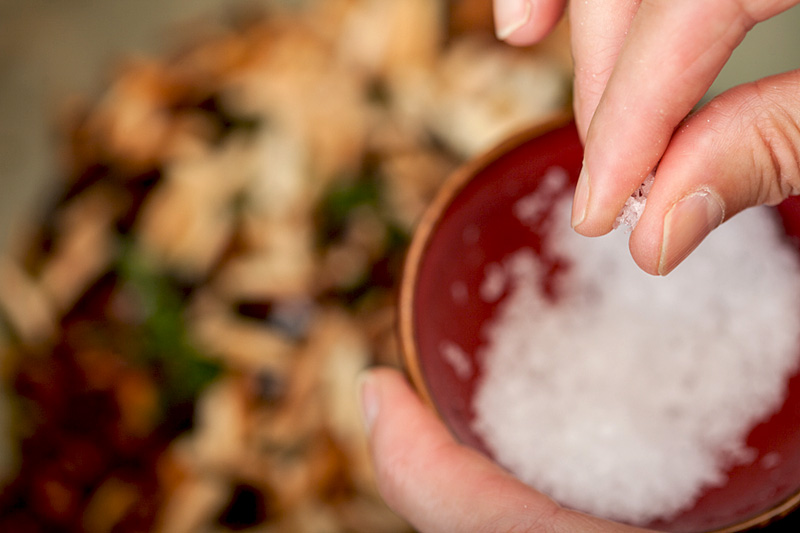
To Take Something With a Pinch/Grain Of Salt (used as a verb)


 Photo by PSC1121-GO


First Example:

Lucy: Did you go to that political rally last night?
Jason: Yeah, and it was amazing! She had such great ideas, and her campaign promises are really inspiring.
Lucy: Maybe, but make sure you take anything she says with a pinch of salt.
Jason: What do you mean?
Lucy: Well, she's a politician. They're known for promising things they can't actually deliver just to get more people to vote for them.
Jason: I know, but I think she's for real.

Meaning: 

To "take (something someone says) with a pinch of salt " is a phrase that means you should be critical of what a person says. This idiom is often used when the person who says it doesn't trust something another person said, or thinks they have an ulterior motive.  In the example, Jason is excited by a political candidate, but Lucy says he should take what she says with a pinch of salt, suggesting that the candidate may be promising things she doesn't intend to deliver on.  
In addition, the word "grain" is sometimes used instead of "pinch." The idiom means the same thing with either "pinch" or "grain."

Here is another example:  
            
Bill: Want to try that restaurant that just opened?
Kelsey: I don't know; I heard their service isn't very good.              
Bill: Where did you hear that?
Kelsey: I read a review on Yelp.
Bill: Oh. Well, I take reviews on there with a grain of salt. A lot of people only write reviews if something went wrong and they want to complain.
Kelsey: True, and it got a pretty good review in the paper. Yeah, let's try it and decide for ourselves.


In this case, Bill says to take online reviews with a grain of salt, suggesting online reviews are often skewed. 

Thursday, May 12, 2016

Be On The Fence


Context #1

Jim:  Have you decided who you're going to vote for?

Chris: I still don't know.  I'm kind of on the fence right now.  Both candidates are qualified and seem great for the job.


Context #2


Carol:  Have you and your husband found a new apartment yet?


Shelly:  Well, we're still on the fence about which city to live in.  I want to live closer to the beach, but my husband wants to live closer to his work. 


MEANING: to be on the fence means that you cannot make up your mind between two choices or alternatives.  It means that you are having a hard time deciding on one thing over the other. 

Tuesday, May 3, 2016

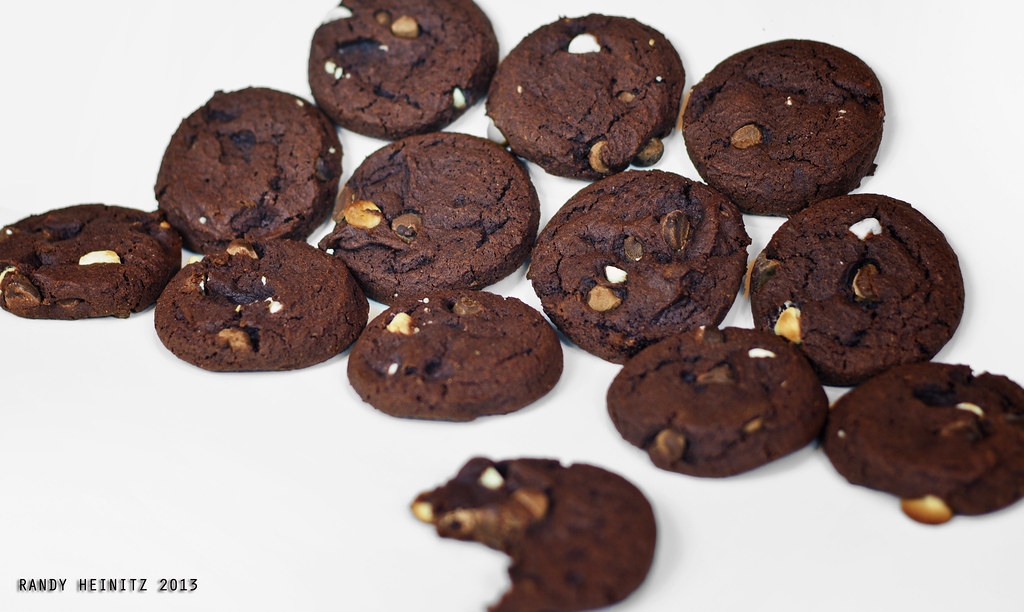
A Baker's Dozen (used as a noun)


 Photo by Randy Heinitz

First Example:

Stephanie: I need to get some bagels for a meeting.
Baker: How many do you need?      
Stephanie: Well, there's going to be 10 people, but I want a couple extra because I'm not sure what everyone likes. So I guess a dozen.
Baker: How about a baker's dozen, which is thirteen?
Stephanie: That's perfect!


Meaning: A "baker's dozen" is a phrase that really just means "13" of something. This expression is most commonly used when purchasing baked goods, such as bagels, donuts, rolls, etc. It refers to the tradition of a baker throwing in one extra when a customer purchases 12 of something, as in the example above.


Second Example (added by request):

Christina wanted to give out donuts during her class presentation. There 12 students including herself, but there was also the teacher, so she asked for a baker's dozen.

Origin (a little something extra):

It's commonly believed the expression comes from medieval England, when there were strict laws regarding bread sellers. Since bread was a staple in the people's diet, there were laws regulating the price of bread based on weight. So if a baker sold a customer a dozen loaves, but accidentally only included 11 loaves, or one of the loaves was under weight, that baker could be heavily fined for overcharging the customer. So bakers started throwing in an extra loaf for orders of a dozen loaves, just in case, and the expression was born.

Thursday, April 21, 2016

For the Birds


Context #1 – Roommates watching TV at home

Vanessa: This new TV show was supposed to be so good, but it's really boring and confusing. I have no idea what's going on.
Brad: Yes, this show is definitely for the birds. Why don't we change the channel?
Vanessa: I agree. Even reruns of old shows are better than this!

Context #2 – Two friends at a party

Sami:  Hey, Petra! How are you?
Petra: OK, I guess. I hardly know anyone here.
Sami: Yeah, me too. I thought Brian invited a bunch of our friends?
Petra: I don't see anyone. Plus, these snacks suck. A few carrot sticks and sparkling water? Seriously? This isn't supposed to be a health club, it's a party!
Sami: I know. And this live band is terrible. They are just making noise, not music.
Petra: You know what? This party is for the birds. Let's get out of here and go some place fun!
Sami: Great idea! Let's go.


Meaning: “For the birds” means that something is worthless or undesirable. In Context 1, the new TV show is terrible and not even worth watching, so they decide to change the channel. In Context 2, the party doesn't have good food, music, or people they know, so it is no good. Petra and Sami finally decide to leave.

Check out the following video that is literally "For the Birds!"


Tuesday, April 19, 2016

To Buy the Farm


Context #1 – Two friends talking


Victoria: Did you hear the news?
Brandon: No, what happened?
Victoria: Do you know that older man who lives down the street from us?
Brandon: Oh, yes. I do.
Victoria: Well, he bought the farm yesterday.
Brandon: Really? But he was only 87 and in good shape.
Victoria: I know! And I've heard he would go skydiving twice a week.
Brandon: So he bought it while skydiving? .
Victoria: No, he was fine after skydiving yesterday. He came home, ate dinner, and then went to bed. It happened in his sleep.


Context #2 – Talking about a movie


Sal:  That movie was so violent! It's like everyone bought the farm at the end.
Patty: Well, it was a war movie.
Sal: Yeah, I guess so.
Patty: It really shouldn't have surprised anyone when most of the characters bought it. That's just the way it goes.
Sal: Well, it's depressing. Why don't we go see a comedy next time?
Patty: Sound good to me.

Meaning: “To buy the farm” or “to buy it” means to die or be killed. It's usually used in the past tense (bought the farm) and it is sometimes used without “farm” (bought it). In Context 1, the older man dies in his sleep with no visible cause. In Context 2, many of the people in the war movie are killed in combat, so it is a violent film.

Tuesday, April 12, 2016

Hole in the wall

Context #1 

Sam: Last night we found this really awesome restaurant for authentic southern BBQ!
Tony: Really?  Where is it?
Sam: It's a tiny little hole in the wall right on the corner of Main St. and First.  The food is cheap and delicious!


Context #2 

Jenny: So, how was your trip to San Diego? 
Sara: It was great!  We found this little hole in the wall downtown that had the best Mexican food I've ever had.
Jenny:  Wow! That sounds good!

Meaning: In American English, the term hole in the wall is used to describe a small restaurant that is usually cheap and delicious, but sometimes a little dirty looking.  It sometimes can mean that the place is a little dirty looking but with good food or a cozy atmosphere.  


Tuesday, April 5, 2016

Let the chips fall where they may

Example 1: 
Dad: Hey Johnny, it's almost 3 o'clock. Your guests should be arriving soon.
Johnny: Dad, I'm not popular. I bet no one will come. I invited everyone in my class to the party, but I bet we'll be here alone. 
Dad: Well son, I think you're a great kid and it was nice that you invited everyone. Let the chips fall where they may. If only a couple of people come, great. If everyone comes, great! We will have a good time either way. There's no sense in worrying about what you cannot control.


Example 2:
Stan placed a $200 bet on the last game of poker. He didn't know if he could win or not. His whole attitude was to let the chips fall where they may while he was staying in Las Vegas. 


Explanation:
Imagine throwing up a handful of small plastic chips. There is no way to control where they will fall. The expression let the chips fall where they may is a way of looking at and dealing with life that accepts its randomness without too much worry. It can also be used when one isn't concerned about the outcome of their actions. This expression can be used when you or someone else is preoccupied or anxious over something you have no control over.

Friday, March 25, 2016

You rock

First Example:


Freddie: I’m going to organize the biggest party of all time.
Mick: Dude, you rock!  When is this party going to take place?
Freddie: We’re going to rent an entire farm and set up a massive sound system that all the neighbors will be able to hear.
Mick: Wow! You’re really putting on a show.

Meaning: "You rock" is an expression used to show strong approval.  Since Rock N’ Roll is a popular genre of music, it is an expression going back for some time.  However, it’s still popular in use.

Second Example:

John: Hey man, do you think you can have that work done by the end of the day?
Paul:  I completed that work last week.  I can have it on your desk in a minute.
John:  Fantastic! You rock!  I can always count on you.
Paul:  Thanks.  I really appreciate your comment.


Meaning: In this instance, “You rock” is also used for approval, but it can also be used as a cheer from excitement.


Let your freak flag fly


First Example:

Nancy: What are you wearing for the costume party?
Marco: I’m going to wear a bear hat, a penguin coat, and cheetah pants.  I’ll be the weird one of the party.
Nancy: You’re really going to let your freak flag fly, huh?
Marco: Thanks.  You know me; I’m always trying to be fun.

Meaning: "Let your freak flag fly" is a positive expression used to show a characteristic that’s hidden or overt implying a unique or unconventional way of thinking.  Some people feel that the work “freak” might be a bad thing, but in this instance, it’s a show of approval.

Second Example:

Barbara:  What do you think about my idea for the holiday party we all wear our clothes inside out?
Tom:  I’m not sure.  That seems a little crazy.  Don’t you think?
Barbara:  Oh, come on!  Let your freak flag fly!  Not everything has to be formal in life.
Tom:  You know what?  You’re right.  We should have a little fun in the office every now and again.


Meaning: In this instance, “Let your freak flag fly” is used to show a unique way of thinking, that although may seem strange, can be a positive thing.  Here Barbara is just trying to create a fun atmosphere for the day.  It doesn’t necessarily mean it’s a permanent condition or thought.


Thursday, March 24, 2016

To Shoot the Breeze

Meaning: Chat or talk to someone in a very casual, fun way


Context #1 – Two students are talking about going on Spring Break

Jaffer:  I can’t wait until the end of this term! I really need a break from studying.
Katrina: I know. It’s nice to take a break from school every now and then. What are you planning on doing?
Jaffer: Nothing. I just want to sleep all day, sit around, and shoot the breeze with my friends. I won’t even open one of my textbooks. I can’t wait!
Katrina: Me, too! I’m just going to be shooting the breeze and having fun! 
Jaffer: Well, have a good one!

Context #2 – Two co-workers are gossiping in the office around the water cooler

Simon: Did you see Kevin today? Unbelievable!
Pete: Huh? What do you mean?
Simon: He was over there at his desk just shooting the breeze with Jasmine. I don’t think he has worked even one minute today.
Pete: .Really? But Kevin is always such a good worker and finishes everything on time. Are you sure he wasn’t just helping Jasmine with her work? He just doesn't seem like the type to sit around and shoot the breeze with people at work.
Simon: Ha! Believe me, that wasn’t work! He was just sitting there enjoying their little chat without any concern about the tons of work everyone has to do.
Pete: Well, I’m sorry to hear that. Maybe he just didn’t feel like working today.

Meaning: “To shoot the breeze” means to talk or chat with someone in a very casual manner. In context 1, Jaffer isn’t going to go anywhere for his break. He just wants to “shoot the breeze” and hang out with his friends. In context 2, Simon is angry that Kevin is just sitting around and chatting with Jasmine instead of working.